Porterhouse
Huge • Bone-in • Strip + big filet
Scorecard
What does porterhouse taste like?
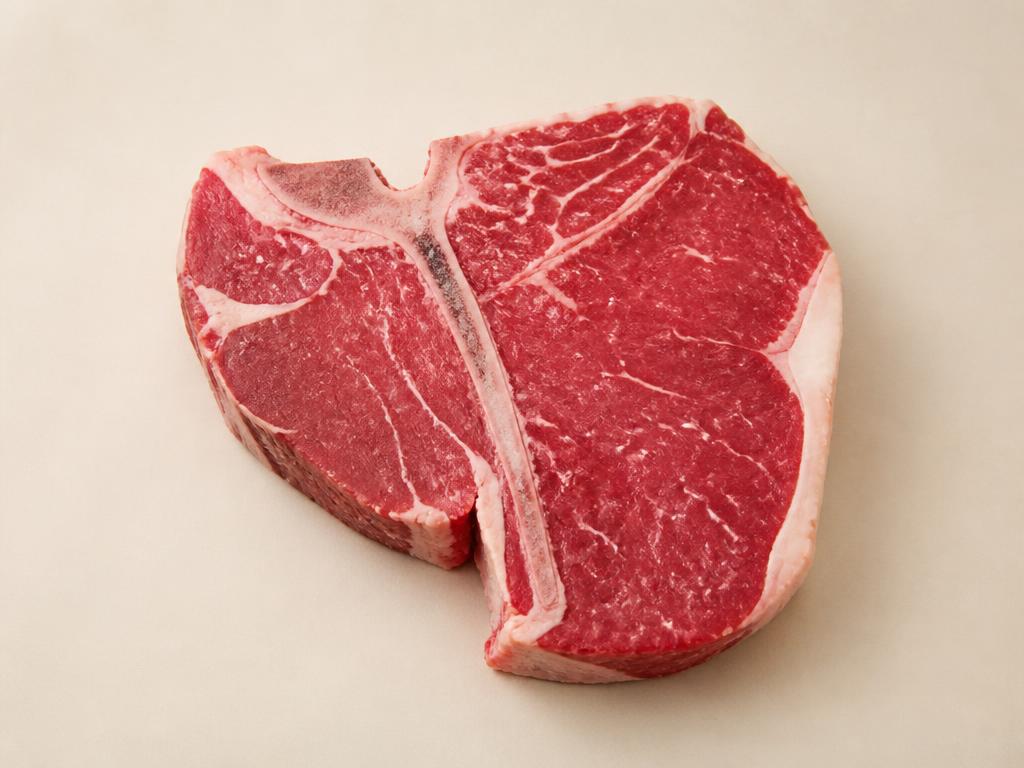
A porterhouse is a T-bone cut from further back, so the tender filet side is much bigger. It's the classic steak to share.
What does porterhouse look like?
Same T-shaped bone as a T-bone, but noticeably larger overall with a filet section at least as thick as your thumb is long.
Choose Porterhouse if you like
- • sharing
- • a big filet portion
- • a special occasion
Skip it if
- • you're eating alone
- • you want something quick and simple
Where it comes from: Rear short loin, over the widest part of the tenderloin — the short loin section. See the beef cut chart.
Also called: King T-Bone, Bistecca alla Fiorentina.
Often seen in: Steakhouses, Italy, United States.
How to cook porterhouse
Porterhouse
Medium rare- Best methods
- Grill with two heat zones · Reverse sear
- Typical thickness
- 2 in / 5 cm
- Time per side
- 5–6 min after a low-heat start
- Rest
- 10 min
- Pull from heat at
- 130°F
- Final after resting
- 135°F
Big and thick — reverse sear (low oven to 110°F / 43°C, then blast it) gives the most even centre.
Common mistake: Searing from cold and ending up raw inside, burnt outside.
What to eat and drink with porterhouse
A big, shared, fat-rich cut. Sides should be generous and the wine should have real structure.
Sides
Creamed spinach and hash brownsClassic
The classic steakhouse spread built for a shared cut.
Roasted bone marrowCrowd favorite
Doubles down on richness for a celebration plate.
Sauces
BéarnaiseClassic
Serves the tenderloin side while the strip side needs nothing.
Red wine shallot jusClassic
Concentrated and tart — the traditional bone-in steak sauce.
Wine
Bordeaux blend / CabernetSommelier consensus
Enough tannin to handle a large, fatty, bone-in steak.
Barolo (Nebbiolo)Sommelier consensus
High acid and high tannin — the traditional big-steak wine in Piedmont.