Steak temperature guide
Every doneness level with its pull temperature, what the centre actually looks like, and how long each cut needs. Pull the steak about 5°F below your target — it keeps cooking while it rests.
Doneness chart
Tap a level to see the cross-section and what it eats like.
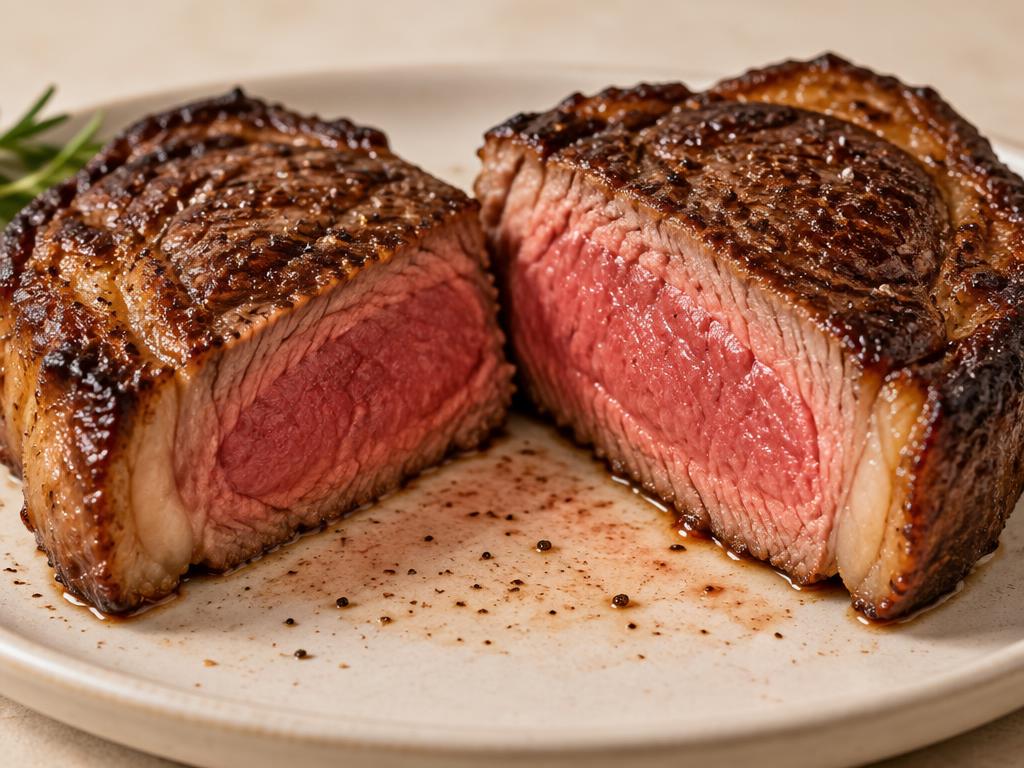
Medium rare
Pull at
130°F
After resting
135°F
- Centre
- Warm pink-red across most of the centre
- Texture
- Tender with a light bounce, maximum juiciness
The default for almost every steak on this site. Fat has started to render, muscle fibres have not yet tightened, and juices stay in the meat.
Steak temperature chart
| Doneness | Pull from heat | Final temperature | Centre |
|---|---|---|---|
| Blue rare | 110°F | 115°F | Deep purple-red, barely warm |
| Rare | 120°F | 125°F | Bright red centre, warm through |
| Medium rare | 130°F | 135°F | Warm pink-red across most of the centre |
| Medium | 140°F | 145°F | Pink centre, wider brown bands |
| Medium well | 150°F | 155°F | Thin pink line at the very centre |
| Well done | 160°F | 165°F | Brown-grey throughout, no pink |
These are restaurant serving temperatures. The USDA recommends cooking whole cuts of beef to 145°F / 63°C with a three-minute rest for food safety; most steakhouses and home cooks serve medium rare below that.
Cooking times by cut
Pick a cut for its methods, times per side and resting.
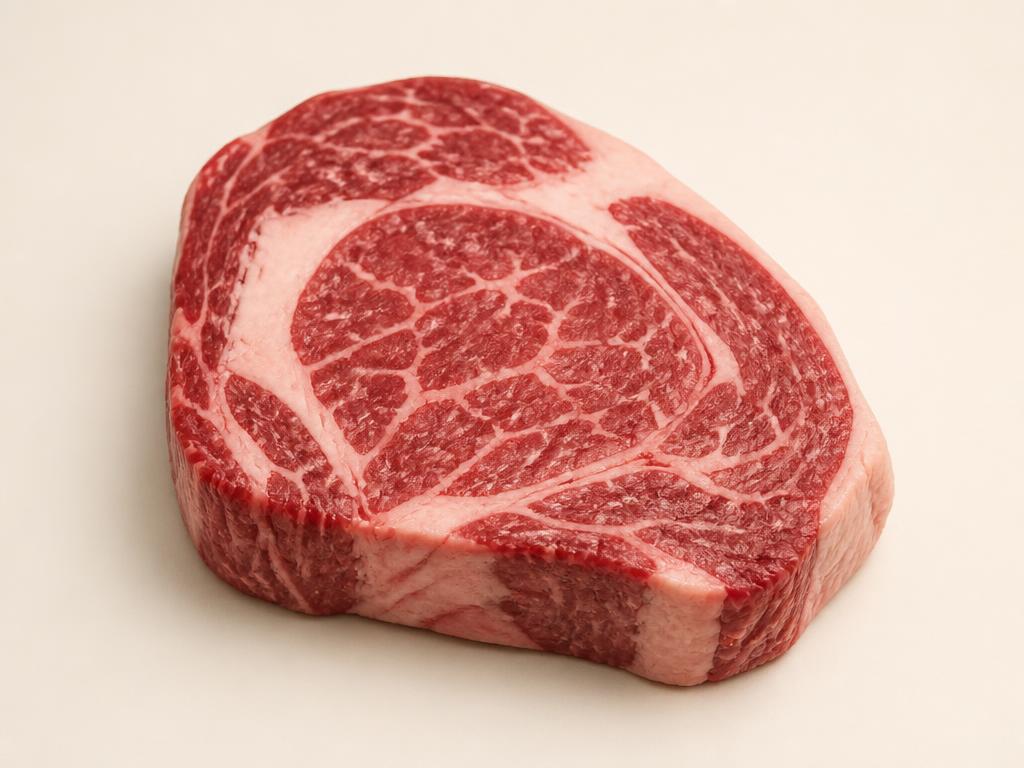
Ribeye
Medium rare- Best methods
- Cast iron sear · Grill · Reverse sear
- Typical thickness
- 1.5 in / 4 cm
- Time per side
- 4–5 min
- Rest
- 8 min
- Pull from heat at
- 130°F
- Final after resting
- 135°F
Render the fat cap first: stand the steak on its edge for a minute before laying it flat.
Common mistake: Pulling it at rare — the internal fat never melts and eats waxy.
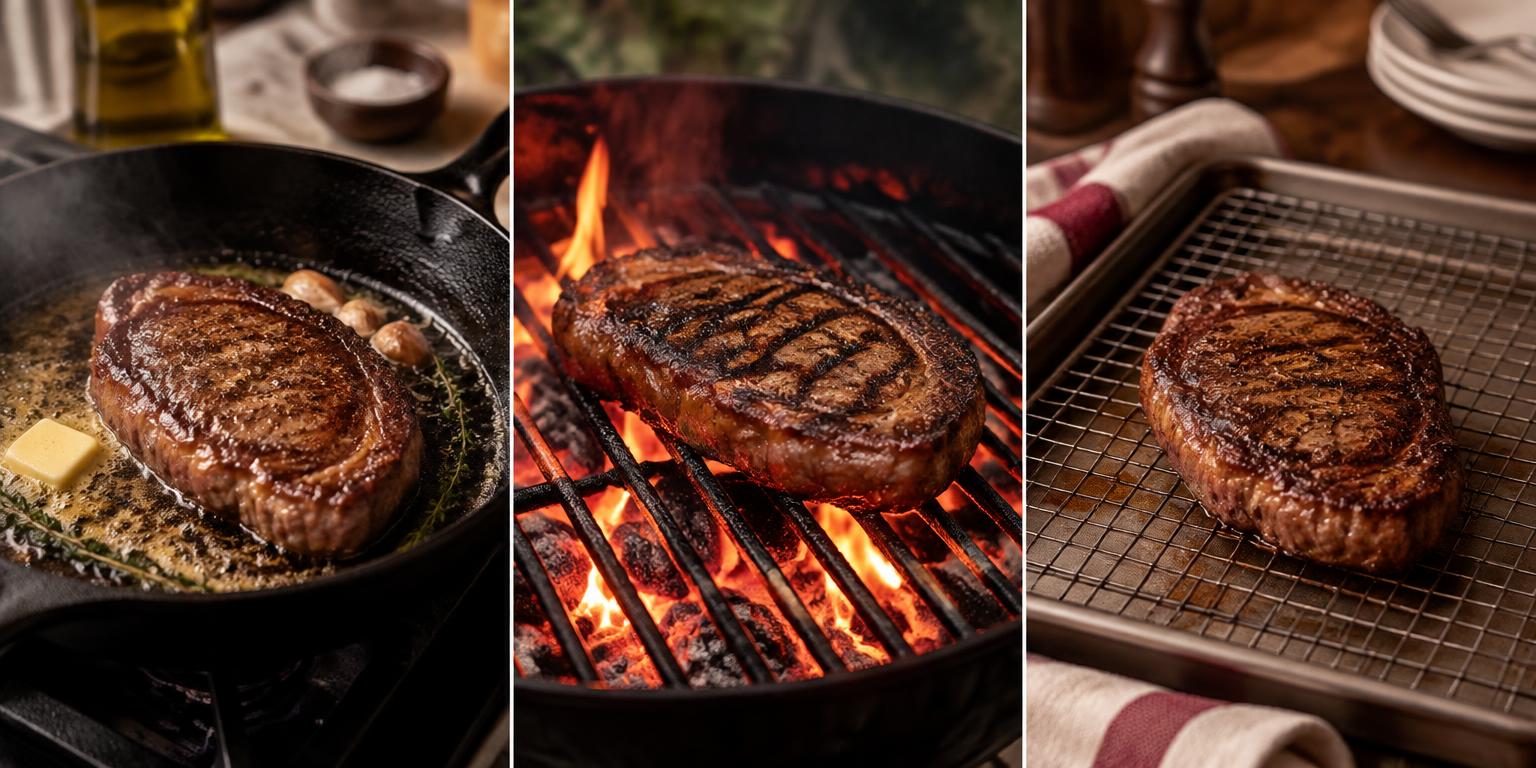
Six steps that decide the result
- 1
Take the chill off
Rest the steak on the counter 30–45 minutes. A fridge-cold centre forces you to overcook the outside to get the inside right.
- 2
Dry the surface, salt it
Pat it completely dry and salt generously. Moisture is the enemy of a crust; salt draws it out and seasons through.
- 3
Get the surface hot
Cast iron or grill grates should be hot enough that the steak sizzles hard on contact. A quiet pan means a grey steak.
- 4
Sear, flip, baste
Flip once or every 45 seconds — both work. In a pan, add butter, garlic and thyme in the last minute and spoon it over.
- 5
Pull 5°F / 3°C early
Carryover cooking keeps raising the internal temperature while it rests. Pull it before it hits your target, not at it.
- 6
Rest, then slice across the grain
Rest 5–10 minutes so juices redistribute. Find the direction the fibres run and cut at 90° to them.
No thermometer?
A probe thermometer is the only reliable way to hit a temperature, and it costs less than one steak. Without one, press the centre with a fingertip: rare gives like the fleshy base of your thumb with your hand relaxed, medium rare like it feels when you touch thumb to middle finger, medium well when you touch thumb to ring finger. It is a rough guide, not a measurement — thickness and cut change how the test feels.